The First-Time Explorer
New to fragrance and overwhelmed by options — needed guidance, plain-language details, and affordable picks so trying something new didn't feel risky.

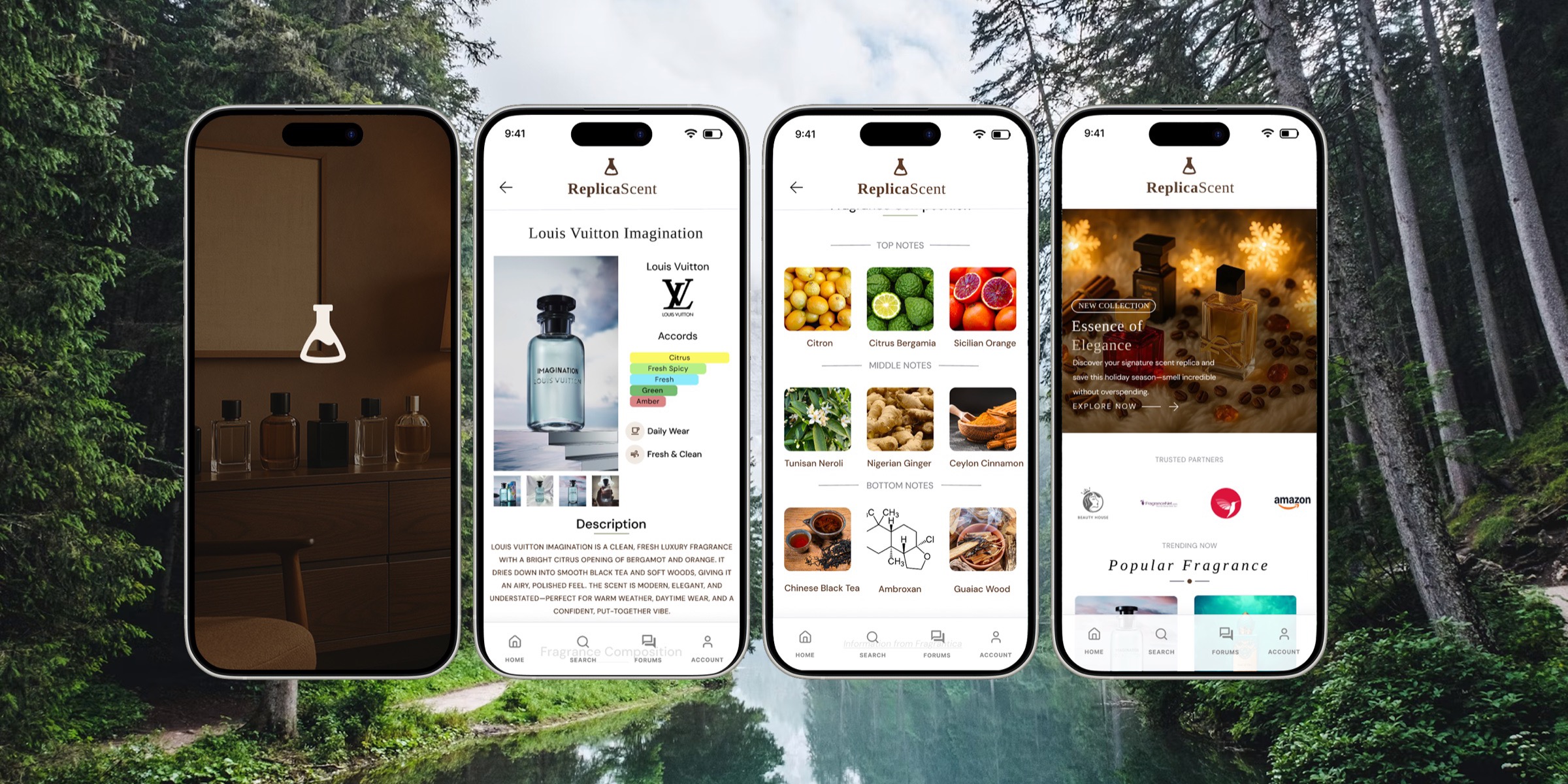
ReplicaScent was designed around a simple problem: a lot of people want expensive-smelling fragrances, but the shopping experience can feel confusing, overbranded, and out of reach.
The concept focuses on making fragrance discovery feel cleaner and more approachable through guided browsing, stronger product context, and a visual direction that feels elevated without becoming intimidating.
The result: a mobile experience that helps users compare luxury-inspired options more confidently, understand what fits their style, and find quality scents without overspending.
Note: ReplicaScent is a self-initiated concept focused on product direction, visual design, and flow clarity.
Overview
Fragrance shopping can feel expensive, intimidating, and hard to decode. ReplicaScent was designed around a simpler question: how can someone discover high-end cologne options without needing expert knowledge or a luxury budget?
The concept leans into a clean mobile experience that feels elevated without becoming overwhelming. Instead of throwing dense product information at users, the interface organizes decisions around scent profile, mood, and lifestyle so exploration feels clearer from the start.
The starting point
ReplicaScent began with a set of early slides — laying out the problem, the kind of fragrance shopper it was for, and what a more confident way to find affordable alternatives could actually look like.
Mapping shoppers across budget, knowledge level, and buying behavior kept decisions grounded in real needs instead of assumptions, so the experience could guide first-time explorers and fragrance enthusiasts alike.
That early framing gave the rest of the work a stronger foundation and shaped how the flows, comparisons, and final screens came together.
User Personas
Competitive Analysis
User Journey Map
New to fragrance and overwhelmed by options — needed guidance, plain-language details, and affordable picks so trying something new didn't feel risky.
Knows what they like and wants the details — looking to compare designer scents with their dupes and judge how close each affordable alternative really is.
Help fragrance shoppers find premium-feeling scents and their affordable alternatives with confidence — without needing to be an expert or overspend?
Design focus
01
The structure helps users start from lifestyle and taste instead of requiring fragrance expertise up front, which lowers the barrier to exploration.
02
Product presentation focuses on the core decision signals users actually need: scent family, mood, and the overall profile the cologne gives off.
03
A restrained layout, neutral palette, and editorial spacing help the concept feel premium without slipping into clutter or over-design.
Design System
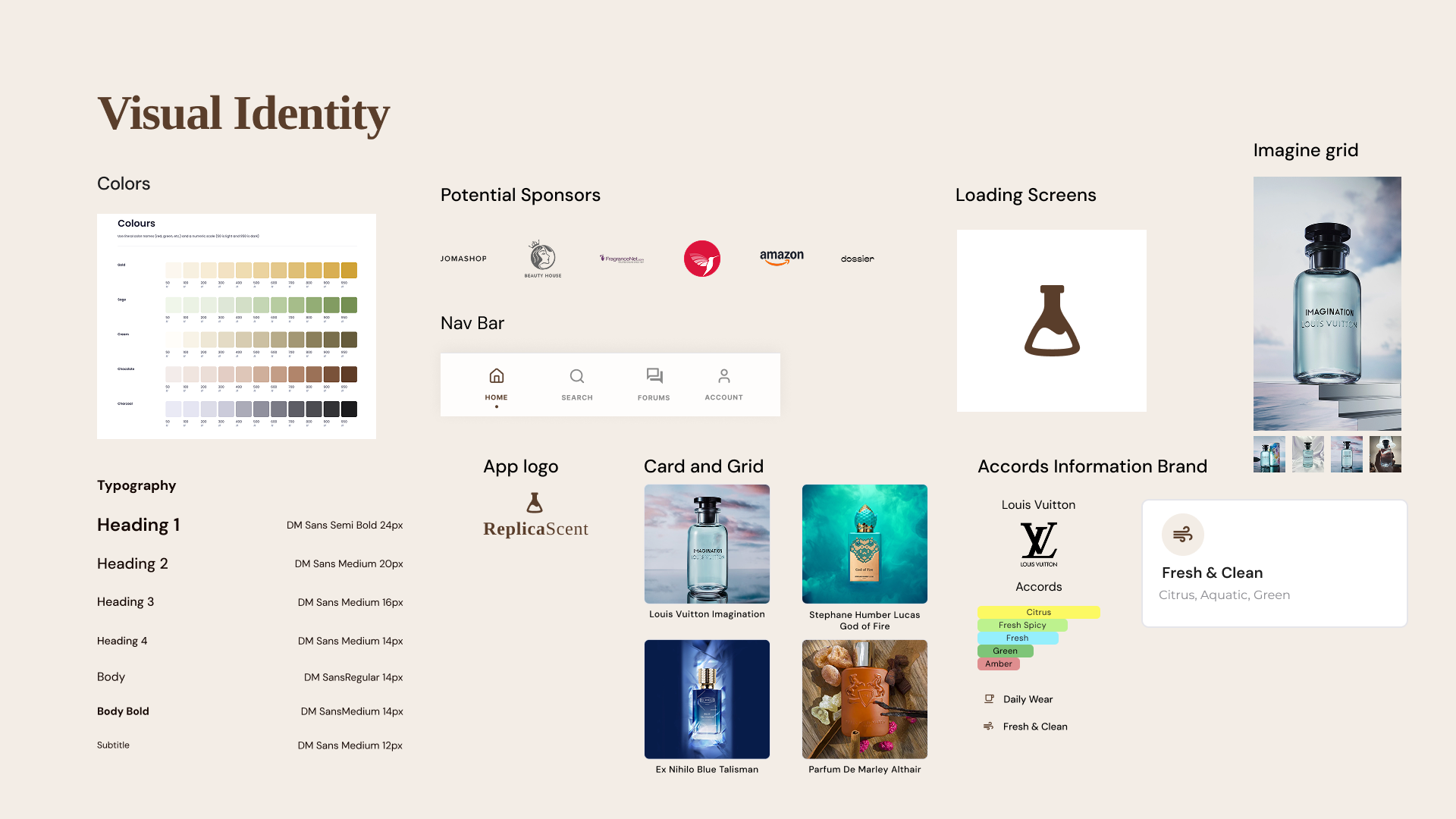
The ReplicaScent system brings together warm neutrals, earthy brown accents, clear typography, simple components, and organized product copy so users can compare scents without the interface feeling dense or intimidating.
Interactive Product Showcase
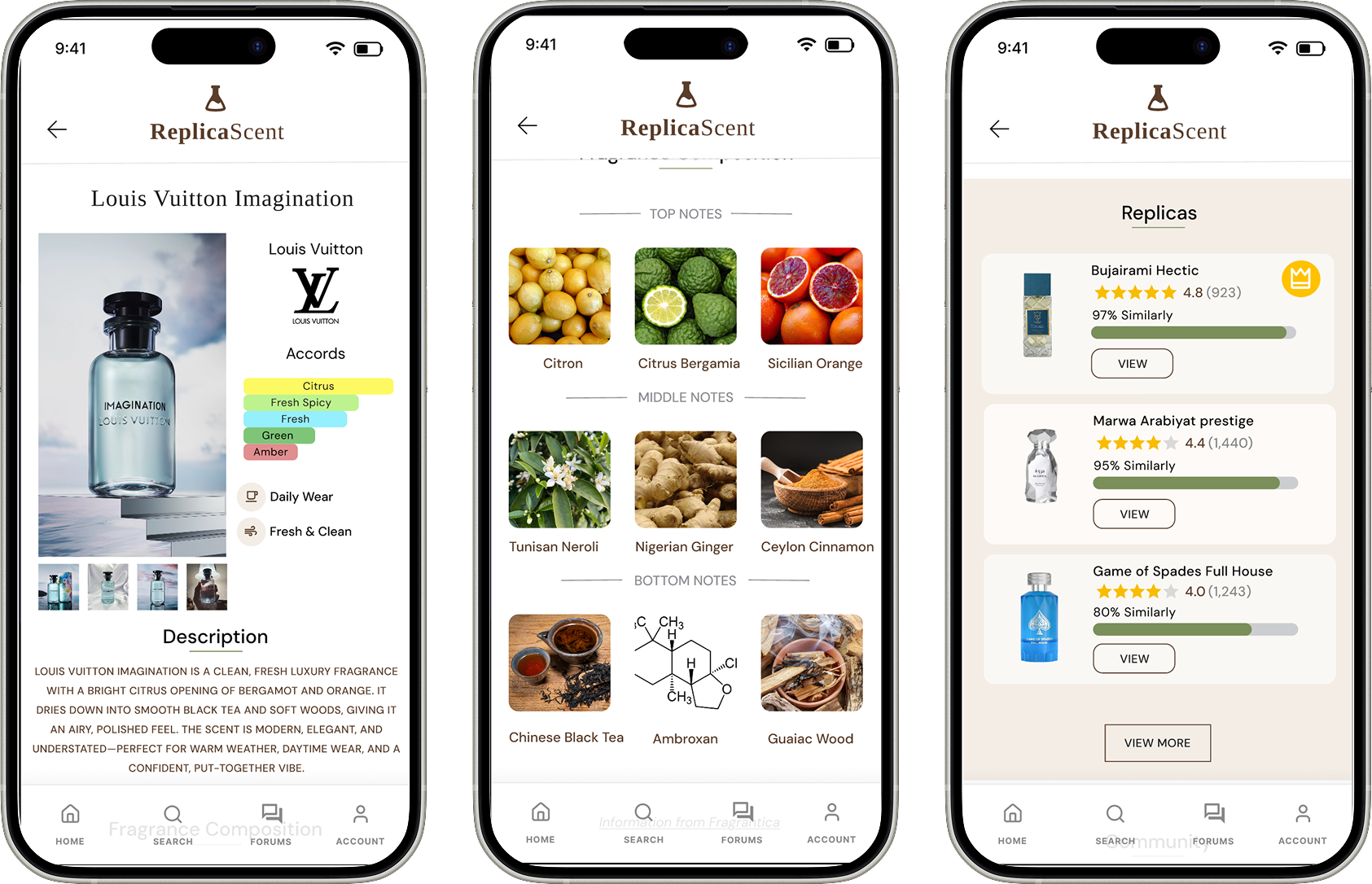
ReplicaScent walks users through a clear product journey: setting fragrance preferences, viewing a scent in detail, comparing a designer fragrance with an affordable alternative, and signing up to save the experience.
Onboarding helps users describe when they wear cologne and what scent families fit their lifestyle, so recommendations feel personal from the beginning.
The scent detail screen gives users the core information they need quickly: fragrance profile, similarity cues, notes, and the context behind the match.
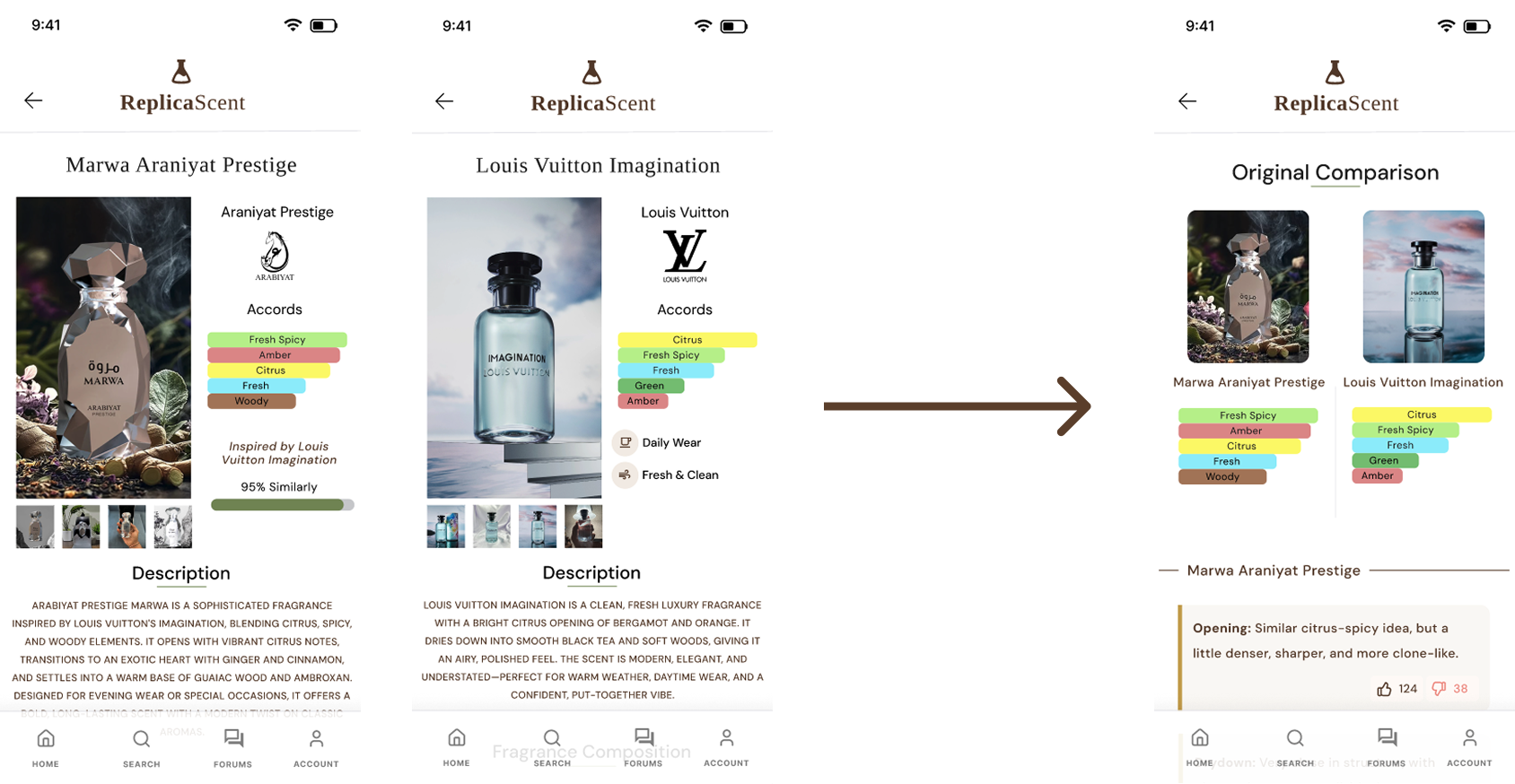
The comparison flow makes the relationship between the designer scent and the affordable alternative easier to understand before users decide what to try.
The sign-up flow gives users a clear path to keep track of fragrance matches, continue exploring, and return to scents they are interested in.
Users need more than a simple dupe result. They also need to understand what a fragrance smells like, how its notes are structured, and which alternatives feel closest before deciding what to try. This direction brings those layers into one cleaner journey so the experience feels more informative instead of overwhelming.
The result: A more streamlined ReplicaScent experience that helps users move from fragrance curiosity to confident comparison without getting lost between product details, scent composition, and replica options.
Instead of only showing one fragrance at a time, this direction compares the original scent and the ReplicaScent recommendation in one view. Key accords, similarity cues, and a short explanation help users understand what carries over and where the dupe changes the profile.
The result: A more transparent comparison experience that helps users trust the match by showing both the shared qualities and the subtle differences before they choose a lower-cost option.
Outcome
Experience
The concept reduces friction by giving people a more intuitive starting point than brand name alone.
Product
The visual direction feels elevated, but the structure still keeps the experience clear and approachable.
Next steps
The next layer would be richer recommendation logic, saved profiles, and stronger side-by-side scent comparison.
The concept compares designer fragrances against known dupes using scent family, notes, and how closely each one matches, then surfaces a similarity score so users can judge value at a glance instead of guessing.
The goal isn't to push the cheapest option — it's to help people find scents they genuinely love at a price they're comfortable with. Designer fragrances are still front and center; the alternatives just give budget-conscious shoppers an honest, lower-risk way in.
Onboarding starts from taste and lifestyle rather than fragrance expertise, and product copy is organized in plain language. That lowers the barrier so beginners can explore confidently while enthusiasts still get the detail they want.
I'd validate how users trust the similarity scores, test the comparison flow with real shoppers, and explore reviews and personalized recommendations so the experience keeps improving after a first purchase.