Students
Students hunting for affordable textbooks and course reads, who needed a simple way to find books that are actually available near their school.
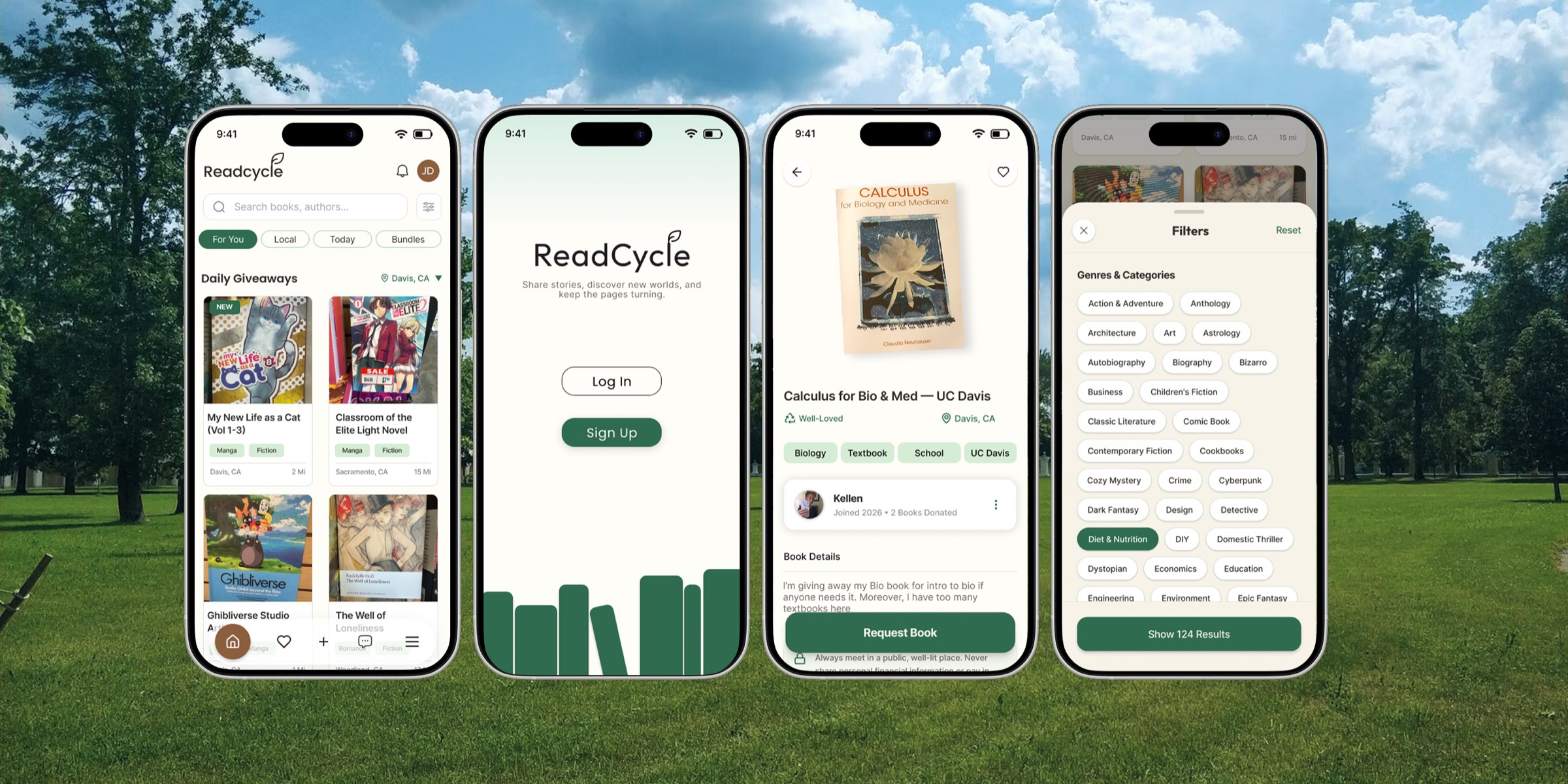
Readcycle was designed around a simple idea: books should feel easier to pass on, discover again, and keep in circulation instead of being forgotten after one read.
The concept focuses on a friendlier exchange experience that balances discovery with community trust. Rather than making the product feel like a marketplace first, the interface leans into warmth, readability, and a sense of low-friction sharing.
The result: a more approachable mobile experience for finding pre-loved books, arranging handoffs, and making reuse feel simple instead of messy.
Note: Readcycle is a concept project focused on product direction, UI/UX design, and the experience of sustainable book exchange.
Overview
A lot of secondhand book experiences feel fragmented. Discovery can be disorganized, condition details are often unclear, and the process of actually sharing or picking up a book can feel more awkward than it should.
Readcycle reframes that experience around clarity and warmth. The interface aims to help users browse available books faster, understand what is worth picking up, and move toward exchange with less friction.
Up first…
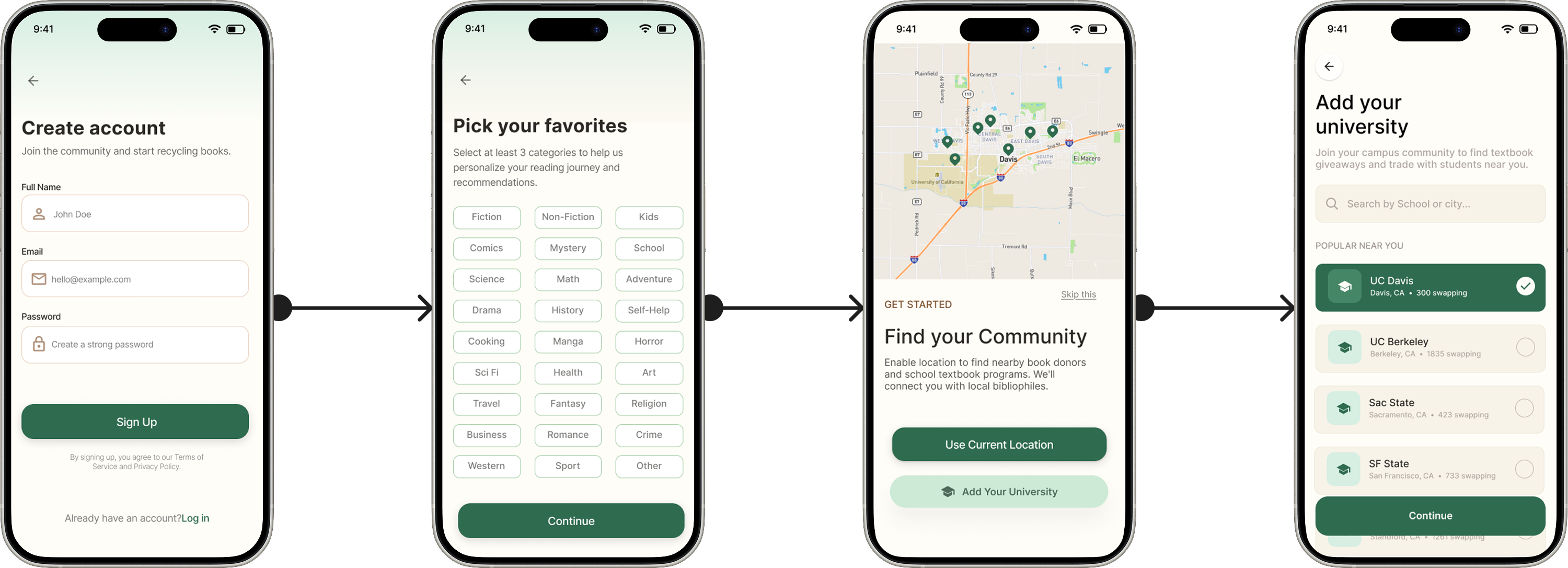
From left to right: Sign up → Pick your favorite book categories → Find your community → Add your school
Finding your community early connects readers with people nearby to swap and pass books with, so exchanges feel personal and local instead of anonymous transactions — and books are more likely to actually stay in circulation.
Letting users pick their school grounds the experience in a real place. It surfaces the textbooks and reads actually circulating on their own campus, which is where students need affordable, relevant books the most.
Asking readers to pick favorite genres up front teaches Readcycle what each person actually cares about, so discovery and recommendations feel relevant from the very first session instead of generic.
The starting point
Readcycle began with a set of early slides — framing the problem, the audience, and what a calmer book-exchange experience could look like before any screens existed. They were the space to pressure-test the concept and decide what was actually worth building.
To keep those decisions grounded, I built a user persona around a real reader's habits, motivations, and frustrations, so the work stayed tied to someone specific instead of broad assumptions about who Readcycle was for.
From there, an information architecture mapped how discovery, exchange, and profile flows connect — giving the project a clear structure to design against and shaping how the prototype and final screens came together.
Students hunting for affordable textbooks and course reads, who needed a simple way to find books that are actually available near their school.
Everyday readers with books they're done with who want to give them away and keep them in circulation — giving each book a second life.
Create an easy, efficient way for people and students to donate the books they're done with — without tossing them out or going out of their way to give them away?
Design focus
01
Browsing needed to feel calm and readable, with enough hierarchy to help users scan covers, titles, and availability without visual overload.
02
The product direction centers on making exchange details more transparent so users feel more confident moving from interest to pickup or sharing.
03
The interface uses open spacing, lighter surfaces, and a friendly presentation so sustainability feels inviting rather than overly instructional.
Design System
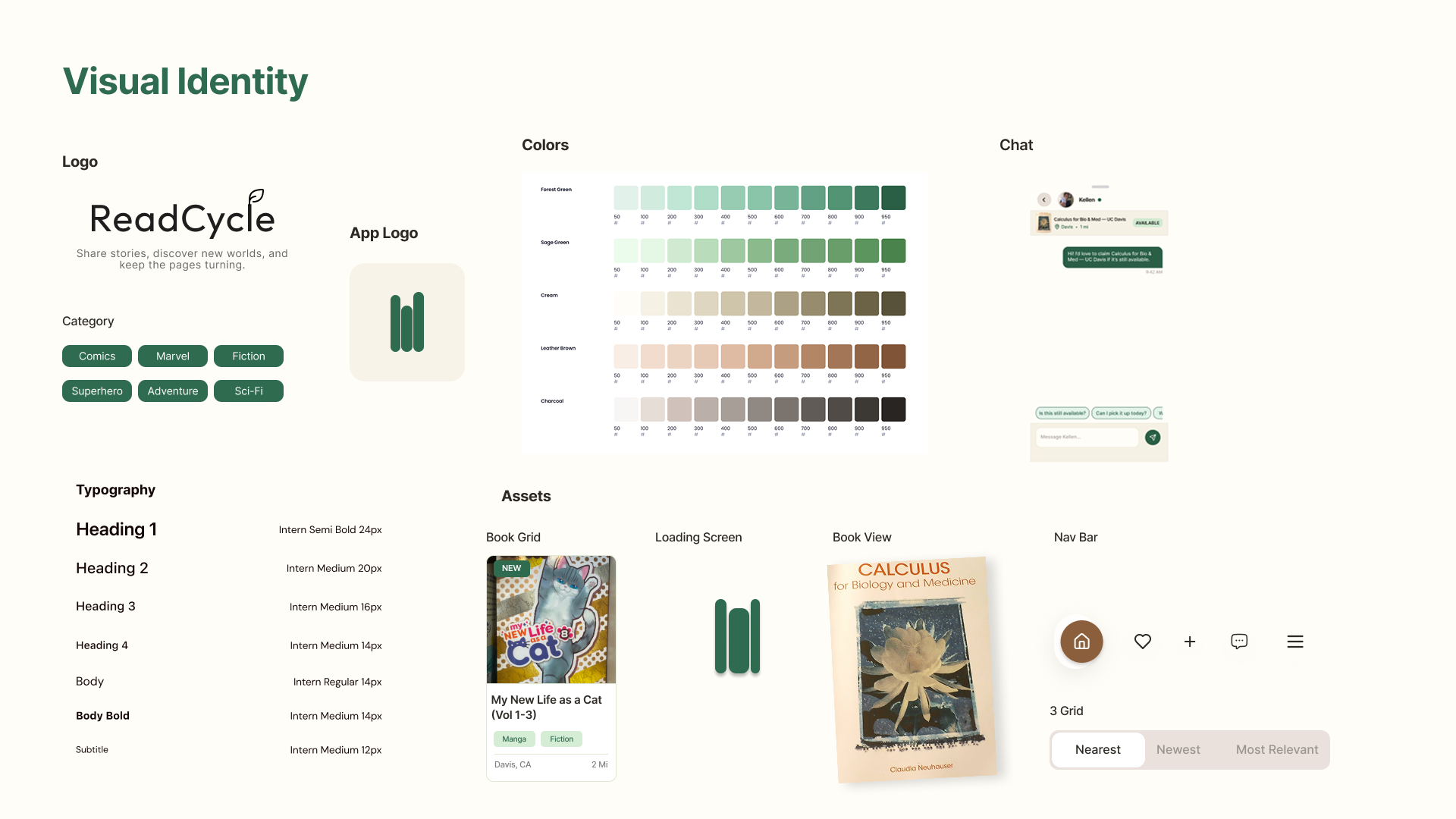
The palette, typography, components, and content structure come together into one system — soft greens and warm neutrals, clear hierarchy, and simple mobile components that keep the experience friendly without feeling like a dense marketplace.
Interactive Product Showcase
Readcycle guides students from personalizing their profile to narrowing down the right book, listing what they no longer need, and coordinating the final request through chat.
A full walkthrough of Readcycle's onboarding — signing up, picking your favorite book genres, finding a local community, and adding your school — so discovery feels relevant and welcoming right from the start.
Smart filters let readers narrow down by genre, condition, and what's nearby — so finding the right book takes seconds instead of endless scrolling.
Once a reader finds the book they want, they can request it and message the person giving it away, turning discovery into an easy handoff between students.
Students can list books they no longer need with a guided flow that keeps the process quick, while AI support helps fill in book details and reduce the work of posting.
Outcome
Experience
The browsing flow is built to help users decide faster which books feel relevant, available, and worth pursuing.
Product
Readcycle positions book exchange as a friendlier reuse experience instead of a dense marketplace interaction.
Next steps
The next phase would strengthen pickup coordination, condition details, saved lists, and community signals around reliable exchanges.
Readcycle focuses discovery around the details students actually need: school, location, genre, book condition, and availability. Instead of browsing a cluttered marketplace, users can filter down to books that are nearby and relevant.
The AI support is meant to reduce the friction of posting a book. If students can quickly generate or fill in book details, they are more likely to list what they no longer need instead of letting it sit unused.
Requesting a book gives the exchange a clear next step, while chat lets both people confirm pickup details before meeting. That keeps the experience lightweight, but still personal enough to feel safe and coordinated.
I would test how quickly students understand the request flow, whether filters match the way they naturally search for books, and what trust signals matter most before they agree to meet or give a book away.